
Subterranean Termites vs. Carpenter Ants: How to Spot the Difference Before Damage Spreads
Learn the key physical signs, damage patterns, and seasonal behaviors that separate subterranean termites from carpenter ants so you can protect your Palmyra home early.
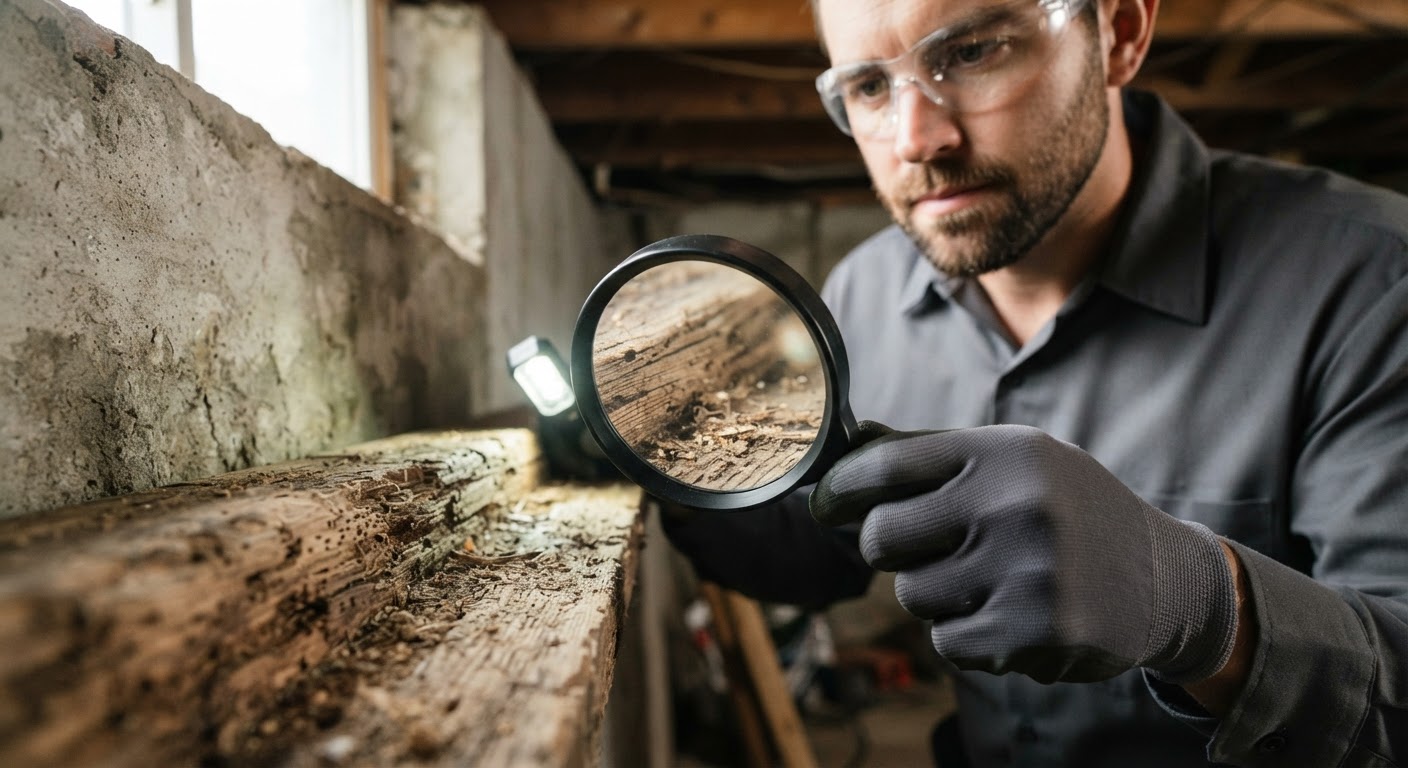
Discovering winged insects near a basement window or noticing soft, hollowed-out wood along a deck post is enough to put any homeowner on edge. In southern Wisconsin, two very different wood-destroying pests are usually responsible for those warning signs: subterranean termites and carpenter ants. Because both insects swarm during warm weather and target damp or vulnerable lumber, they are frequently mistaken for one another.
Telling them apart early makes a major difference in how you protect your home. While both can compromise structural wood if left unchecked, they behave differently, leave behind distinct clues, and require completely different treatment strategies. Knowing what to look for helps you act quickly before hidden damage spreads across floor joists, wall studs, or sill plates.
Why Telling Subterranean Termites and Carpenter Ants Apart Matters
A common mistake homeowners make is assuming that any large ant-like insect with wings is harmless, or conversely, treating a carpenter ant problem with generic sprays designed for kitchen ants. Subterranean termites and carpenter ants do not eat or nest in the same way, so a method that stops one will often leave the other colony untouched.
Subterranean termites feed directly on cellulose found in wood, cardboard, and paper. Living in underground colonies, they travel up into a structure through protected pathways to consume framing lumber from the inside out. Carpenter ants do not actually eat wood. Instead, they chew through softened or moisture-damaged timber to carve out smooth tunnels where they can raise their brood, foraging elsewhere for sweets and proteins.
In Palmyra, WI, homes surrounded by mature trees, shaded lots, and seasonal moisture face pressure from both pests. Identifying the exact intruder ensures your property receives the right targeted termite control or ant control rather than wasted effort.
Key Physical Differences You Can Spot
If you catch sight of the insects themselves, especially during spring or early summer swarms, a close look at a few body features will usually give you a reliable answer. Placing a captured specimen on a white sheet of paper under bright light makes these details easier to see.
Body Shape and Waistline
Carpenter ants have the classic three-part ant silhouette with a distinct, tightly pinched waist separating the thorax from the abdomen. Subterranean termites have a broad, uniform body with a thick waist that flows straight from head to tail without any narrow constriction.
Antennae Shape
Look closely at the antennae on the head of the insect. Carpenter ants have clearly elbowed antennae that bend sharply in the middle, similar to a bent arm. Termites have straight, slightly curved antennae made up of tiny bead-like segments.
Wing Size and Pattern on Swarmers
Both subterranean termites and carpenter ants produce winged reproductive swarmers when a mature colony expands. Termite swarmers have four wings that are all roughly the same length and extend well past the end of the body. These delicate wings break off very easily, often leaving small piles of translucent wings on windowsills or near doorways. Carpenter ant swarmers also have four wings, but the front pair is noticeably longer than the back pair, and their wings stay attached much longer.
Color and Daytime Visibility
Worker termites are pale, creamy white, and soft-bodied. Because they dry out quickly in open air and avoid light, homeowners rarely see termite workers unless they break open infested wood or a mud shelter tube. Termite swarmers, by contrast, are dark brown or black. Carpenter ant workers are dark black, or a mix of black and reddish-brown, and are often quite large. Unlike termites, carpenter ant workers regularly march out in the open along baseboards, kitchen counters, tree trunks, and exterior siding as they search for food.
Comparing the Signs of Damage Around Your Home
Often, you will spot evidence of pest activity long before you ever see a live insect. Checking the condition of damaged wood and the debris nearby provides clear clues about which pest moved in.
Mud Tubes Versus Open Trails
Subterranean termites build pencil-thin shelter tubes made from soil, wood particles, and saliva. You can find these earthen tunnels climbing up poured concrete foundations, cinder blocks, basement support posts, or brick exteriors. The tubes shield termites from dry air and predators as they travel between their underground nest and your home framing. Carpenter ants never build mud tubes. Instead, they create visible scent trails along foundation edges, utility lines, tree branches touching the roof, or patio pavers.
Frass Piles Versus Soil-Packed Wood
Because carpenter ants push wood shavings out of their nests as they excavate, they frequently leave behind small piles of coarse sawdust called frass. Carpenter ant frass often contains tiny fragments of dead insects and bits of insulation mixed with wood fibers. You might sweep up a fresh pile beneath a windowsill, porch beam, or basement joist only to see another pile appear days later. Subterranean termites do not push out clean sawdust. They pack soil and mud back into the cavities they eat, keeping the surface layer of wood thin and brittle.
What the Damaged Wood Looks Like Inside
If a piece of damaged trim or framing breaks open, look at the texture inside the galleries. Termites eat along the softer springwood grain, leaving behind ragged, layered tunnels coated in dried mud and dirt. Carpenter ant galleries look remarkably different: the tunnels cut across the grain and have smooth, clean walls that almost look as if they were sanded down. Knocking lightly on infested wood can also reveal hollow sounding spots behind paint or drywall.
Why Southern Wisconsin Homes Face Seasonal Risk
Palmyra homeowners experience distinct freeze-thaw cycles, heavy spring snowmelt, and humid summer stretches that create ideal conditions for wood-destroying pests. Moisture is the common denominator for both subterranean termites and carpenter ants. Leaky gutters, downspout extensions draining right against the foundation, damp crawl spaces, and wood mulch piled high against siding all soften exterior lumber and invite infestations.
Firewood stacked directly against the house, aging railroad ties in landscaping, and rotting tree stumps near the yard also serve as staging grounds. Carpenter ants frequently establish a main parent nest in a damp outdoor stump or hollow tree before sending satellite colonies indoors. Subterranean termites remain active beneath the frost line during winter and push upward into warm basement sill plates as soil temperatures climb in spring.
Smart Steps to Take If You Spot Warning Signs
Finding discarded wings, mud tubes, or coarse sawdust does not mean you should panic, nor should you immediately reach for a can of store-bought aerosol spray. Taking a few careful steps right away makes professional inspection and treatment far more effective.
- Collect a few insects or shed wings in a sealed plastic bag or small jar so a technician can confirm the species accurately.
- Avoid spraying household insecticides over mud tubes or active trails, as surface sprays often scatter carpenter ant colonies into new walls and push termites to relocate to another part of the foundation.
- Leave mud tubes and damaged wood undisturbed until they can be inspected, since active pathways help pinpoint how pests are entering the structure.
- Check around the exterior perimeter for standing water, clogged gutters, and wood-to-soil contact such as deck stairs or fence posts.
- Move firewood stacks, scrap lumber, and dense mulch away from your home foundation walls.
Because both pests can work behind finished drywall, subfloors, and siding for months before surface clues appear, a thorough visual inspection of basements, crawl spaces, porches, and attic framing is essential to gauge the full scope of the problem.
Targeted Protection for Palmyra Homeowners
Whether your property is dealing with a hidden subterranean termite colony or carpenter ants tunneling into damp porch framing, early action protects your home structural integrity and prevents wider repairs down the road. Store-bought baits and surface sprays rarely reach deep underground termite nests or hidden satellite ant colonies.
Caldrix Termite Defense provides dedicated termite control and ant control tailored to homes and businesses in Palmyra, WI. If you have spotted winged swarmers, mud tubes, or unexplained sawdust around your property, contact Caldrix Termite Defense to schedule a careful inspection and put a targeted treatment plan in place before damage spreads.
Need help from Caldrix Termite Defense?
Contact our team to discuss your service needs in Palmyra and surrounding service areas.